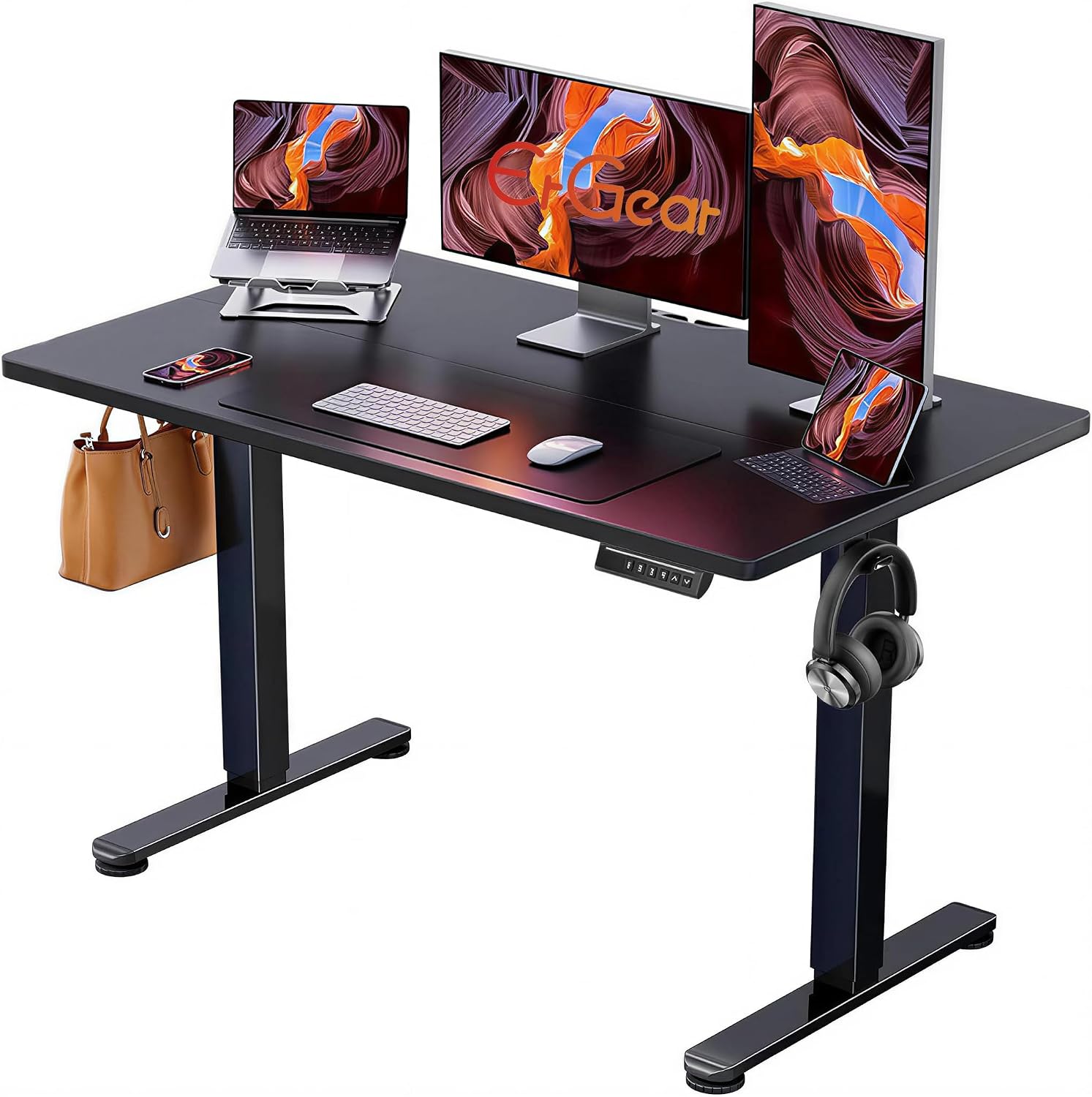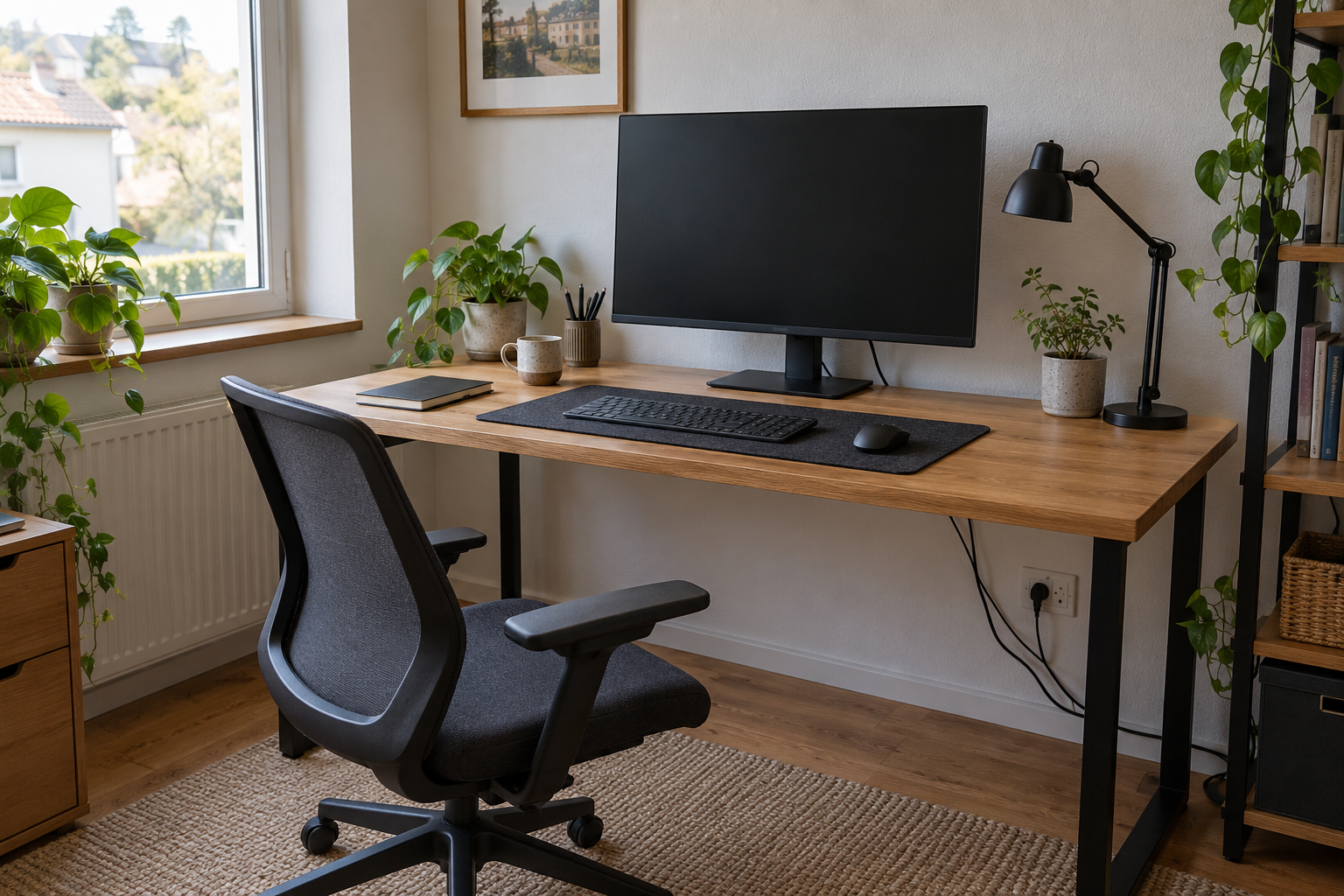
A shared desk works when each person has a complete usable zone. Divide the input areas, cable routes and storage before deciding whether the surface looks balanced.
Your decision, at a glance.
| Decision | What to look at | Next check |
|---|---|---|
| Personal zone | Keyboard, mouse and screen | Independent access and storage |
| Shared zone | Printer or common materials | Reach without crossing the main tasks |
| Shared technology | Display and input switching | Explicit host and connection plan |
Measure two working sessions
Place both keyboards, mouse areas and screens as they will be used at the same time. Include chair movement and the space needed to enter or leave either side. A total desk width by itself does not prove two people can work comfortably.
Separate permanent equipment from shared objects such as a printer or reference books. Give shared items a reachable location that does not interrupt either primary task.
Choose what is actually shared
Two computers sharing a monitor or peripherals need a deliberate connection method, not an improvised cable swap under the desk. Record which device controls the displays and inputs at each moment.
If each person has independent equipment, label cables by both person and destination. This makes a charger replacement or desk reset less likely to disturb the other workspace.
Plan different schedules and preferences
Test lighting and camera framing for both users. A lamp that works for one person can reflect in the other screen. Leave independent storage for the items that should stay set up between sessions.
For a height-adjustable shared surface, both workstations move together. Confirm that the arrangement and cable routes support the intended shared use; separate heights require a different furniture plan.
Sources & scope
Product catalog snapshot: October 19, 2026. Selected primary references checked October 20, 2026. References are not current Amazon offer, price or availability verification.
This planning brief does not contain a verified exact-model specification or product ranking. Its checks define the information needed for a documented comparison; missing values are intentionally not supplied.
This is a research draft, not a hands-on review. How the research is used