Three monitors need a task map before a mounting plan. Decide what belongs on the central screen and why the two side screens need to remain visible.
Your decision, at a glance.
| Decision | What to look at | Next check |
|---|---|---|
| Center display | Main task | Position inputs around the task |
| Side displays | Defined reference roles | Allow angled housing depth |
| Output path | Three supported display modes | Confirm exact computer and dock |
Assign each screen a role
Use the center for the task you return to most often and define the information shown on each side. If a side display is only occasionally consulted, consider whether it needs the same size and orientation as the main screen.
This is a workflow exercise, not a rule that every three-screen setup must be symmetrical. Coding, simulation and reference-heavy work can use different arrangements.
Trace all three housings
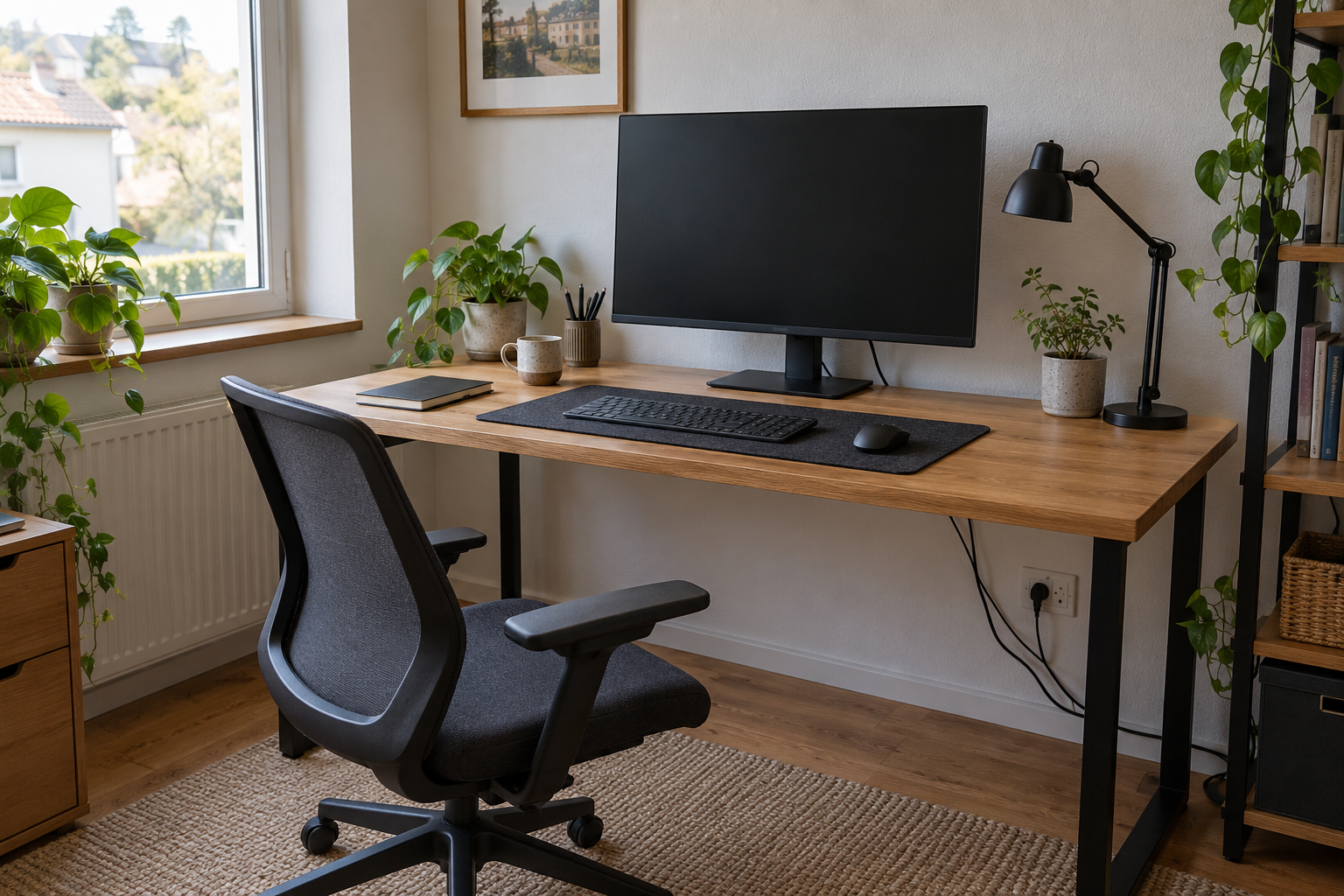
Record width, depth, stand footprint and rotation needs for each display. Draw the final arrangement and the space needed to reach those positions. Angled side screens use depth as well as width.
Check the desk edge and wall clearance before choosing a triple mount. Its published range must cover the actual display combination and intended arrangement.
Verify the independent signal paths
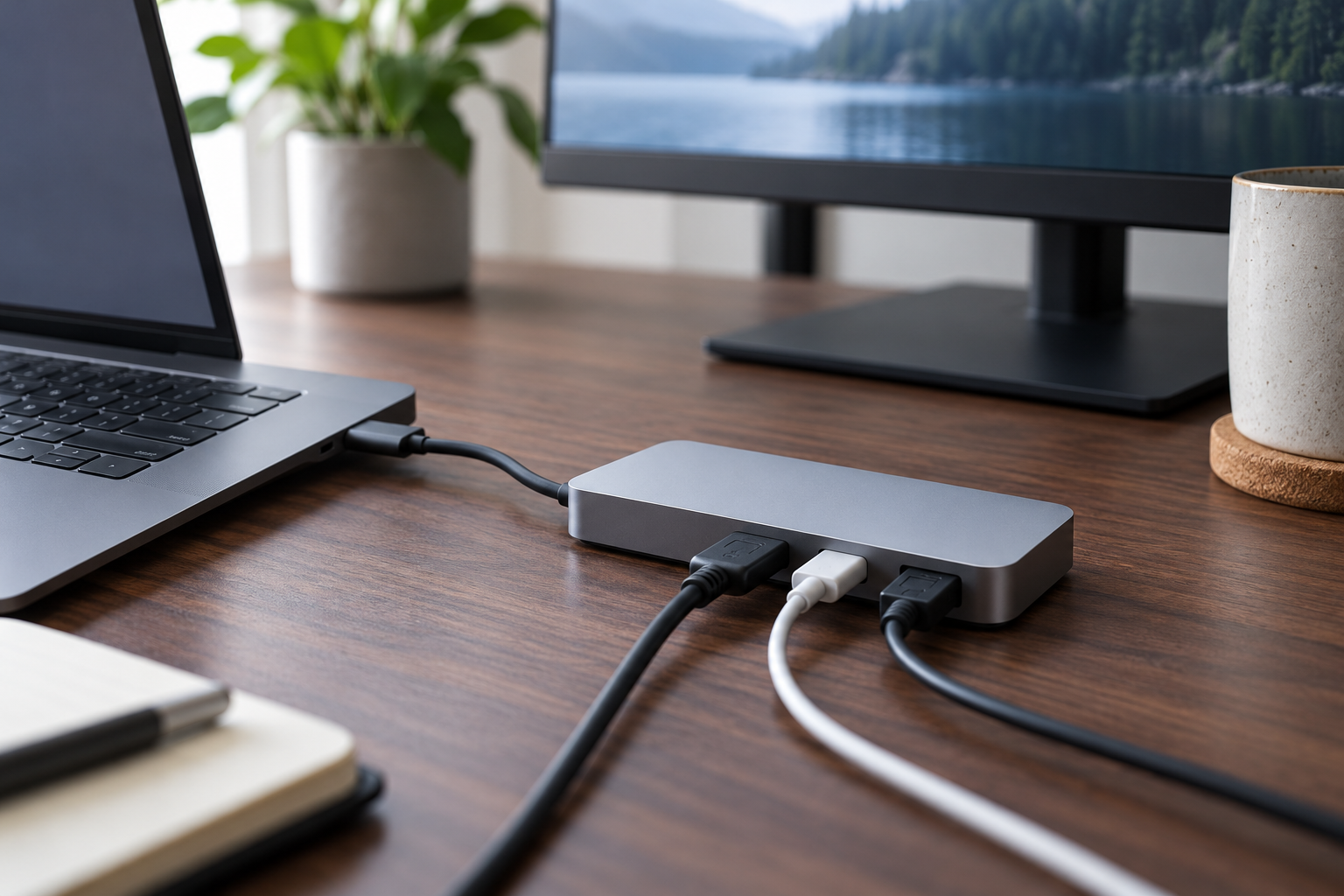
List the computer, dock or graphics outputs and the required mode on each screen. Three physical sockets do not automatically establish three independent outputs at the desired settings.
Check the exact simultaneous-display documentation, then test before hiding cables. Keep each cable identifiable so a future display problem can be traced to one path.
Sources & scope
Product catalog snapshot: October 19, 2026. Selected primary references checked October 20, 2026. References are not current Amazon offer, price or availability verification.
This planning brief does not contain a verified exact-model specification or product ranking. Its checks define the information needed for a documented comparison; missing values are intentionally not supplied.
This is a research draft, not a hands-on review. How the research is used