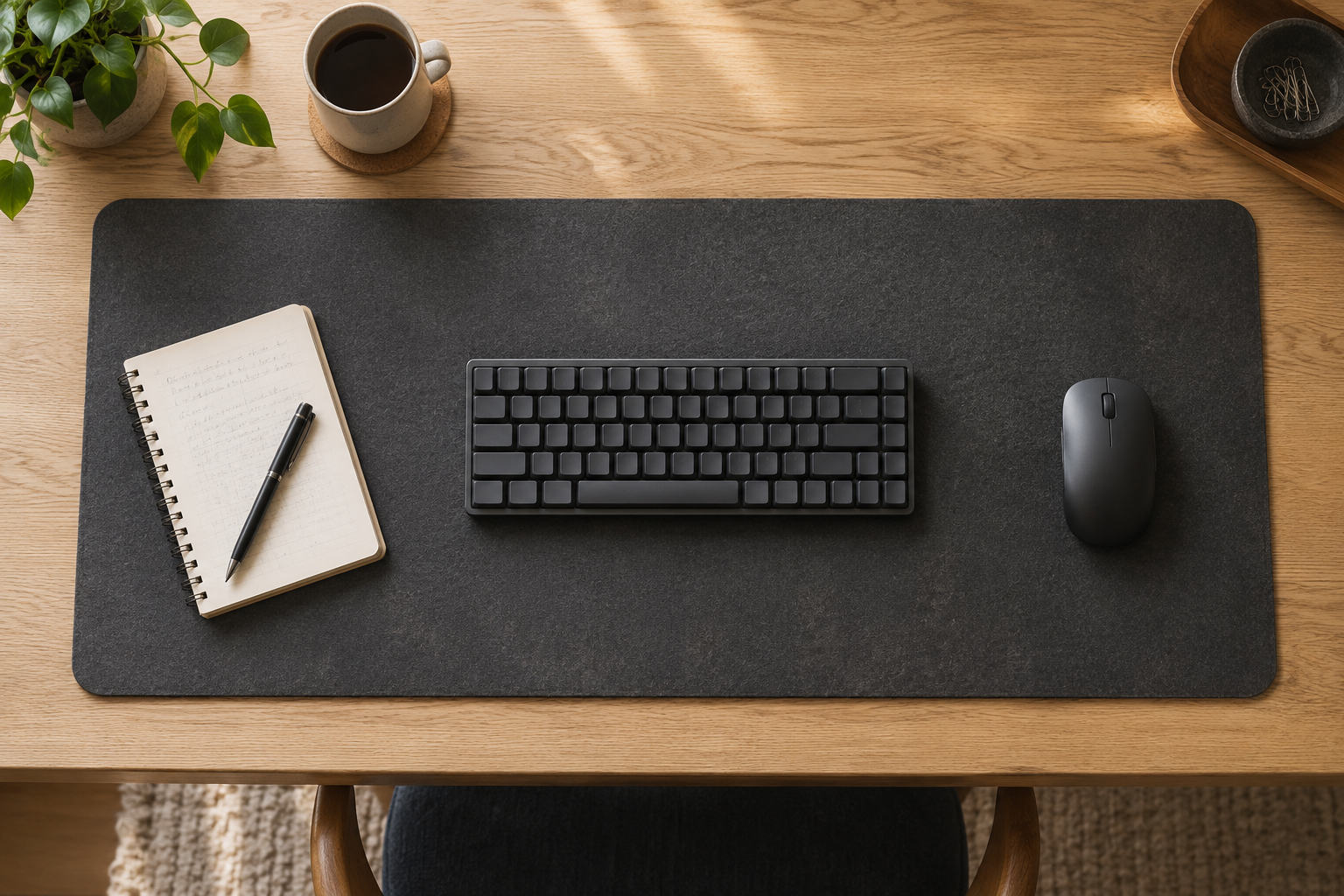
A DIY desk mat begins with the intended surface and the process used to make it. A cut piece of material, a printed textile and a laminated writing pad are different projects.
Your decision, at a glance.
| Decision | What to look at | Next check |
|---|---|---|
| Purpose | Writing, mouse use or decoration | Choose the function first |
| Process | Material and tool instructions | No universal adhesive or heat recipe |
| Finish | Edges, backing and care | Check against the desktop |
Define the finished job
Decide whether the mat must support a mouse, writing, decoration or another task. Draw its final outline with keyboard, monitor and desk-edge accessories in place. Check corners and cable exits before choosing a material size.
Do not infer mouse performance or durability from a material’s appearance. A small sample can help evaluate the intended use without committing the whole desk.
Choose a documented process
Follow the material and tool instructions for cutting, adhesives, printing and finishing. This guide does not prescribe an adhesive chemistry, heat setting or cutting method for an unidentified material.
If outsourcing printing, obtain the supplier’s file and bleed requirements. Keep artwork permissions separate from the physical fabrication process.
Inspect the finished edges and backing
Check whether the result lies as intended and whether edges or seams interfere with the keyboard and mouse. Review the backing’s suitability for the desktop finish and the supported cleaning method.
A decorative DIY mat should not be repurposed as a cutting surface, ESD surface or heated accessory without evidence for that specific function.
Sources & scope
Product catalog snapshot: October 19, 2026. Selected primary references checked October 20, 2026. References are not current Amazon offer, price or availability verification.
This planning brief does not contain a verified exact-model specification or product ranking. Its checks define the information needed for a documented comparison; missing values are intentionally not supplied.
This is a research draft, not a hands-on review. How the research is used