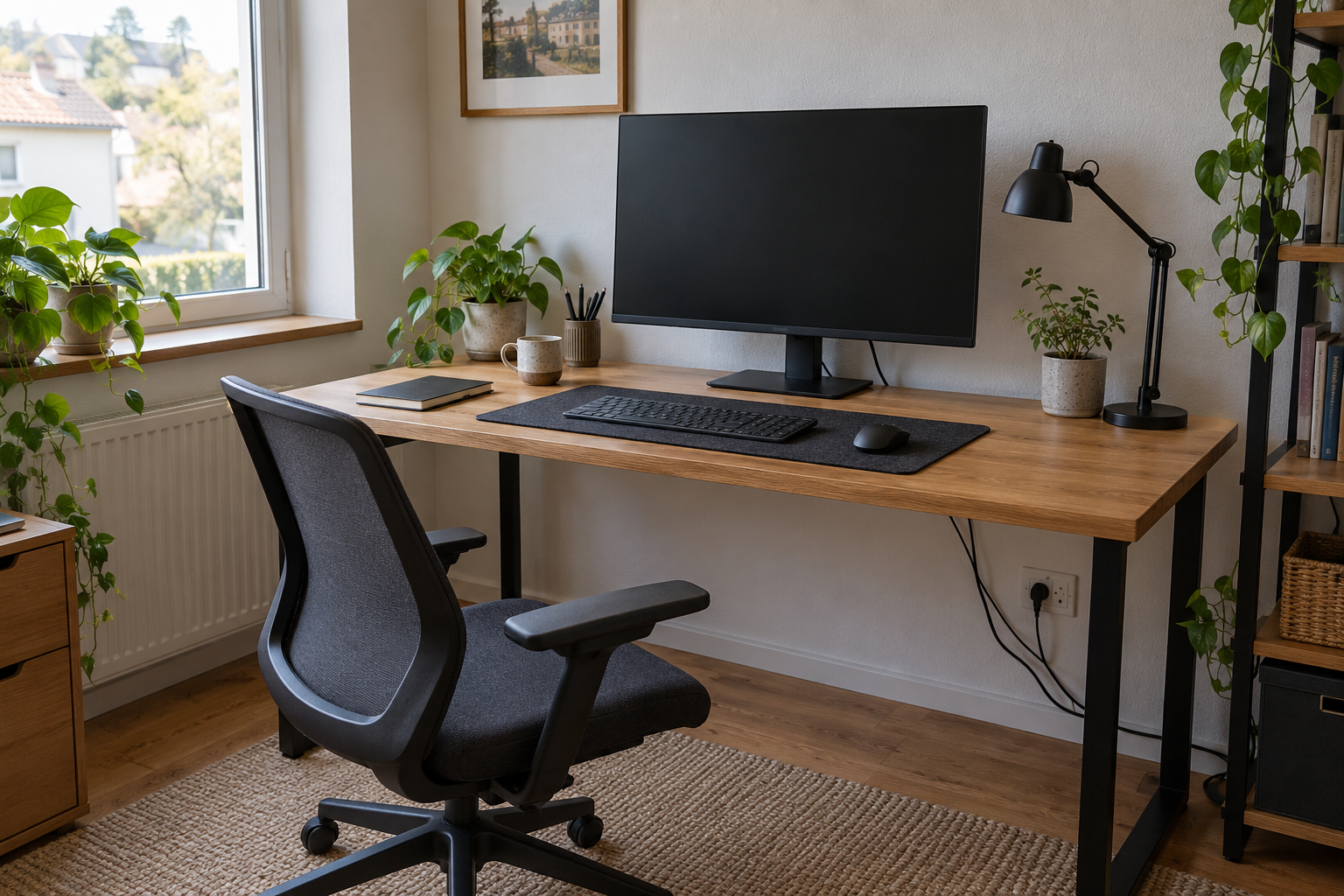
Build a streaming or podcast desk around the recording position first. The camera, microphone and controls should remain usable without occupying the keyboard and mouse area.
Your decision, at a glance.
| Decision | What to look at | Next check |
|---|---|---|
| Camera view | Framing and sightline | Keep moving accessories out of frame |
| Audio position | Microphone and controls | Reserve boom travel and cable access |
| Work surface | Inputs and notes | Separate recording hardware from hand movement |
Draw the frame and the reach zone
Mark what the camera sees, then separately mark what your hands need to reach. A microphone can be correctly placed for recording while its stand blocks the main work area. A boom needs an arc of movement and a suitable mounting point.
Keep frequently used controls visible. If you change scenes, mute audio or adjust a level during a session, include that action in the layout trial.
Avoid competing clamps
A monitor arm, microphone arm and camera pole can all require the same rear edge. Trace their upper and lower fixing footprints and check the desk frame. Evaluate each accessory’s documented mounting requirements rather than assuming one clear edge accepts everything.
Also check what enters the camera frame when the monitor moves or the desk changes height.
Keep signal and power routes understandable
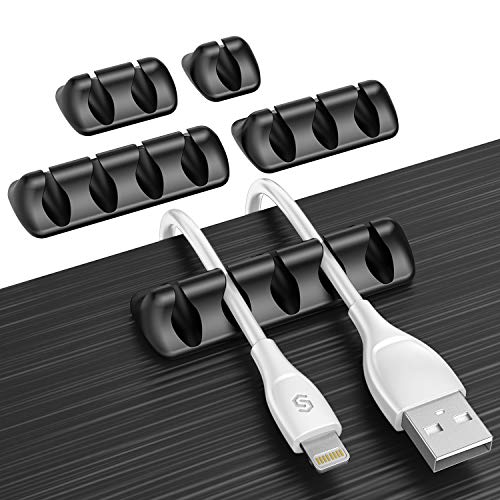
Label the microphone, camera, headphones and capture connections by destination. Test the complete recording path before concealing it. Leave room to disconnect one device without dismantling the rest.
Lighting for a face and lighting for a notebook are different tasks. Inspect the actual camera image for reflections and shadows; decorative color should follow the practical recording arrangement.
Sources & scope
Product catalog snapshot: October 19, 2026. Selected primary references checked October 20, 2026. References are not current Amazon offer, price or availability verification.
This planning brief does not contain a verified exact-model specification or product ranking. Its checks define the information needed for a documented comparison; missing values are intentionally not supplied.
This is a research draft, not a hands-on review. How the research is used