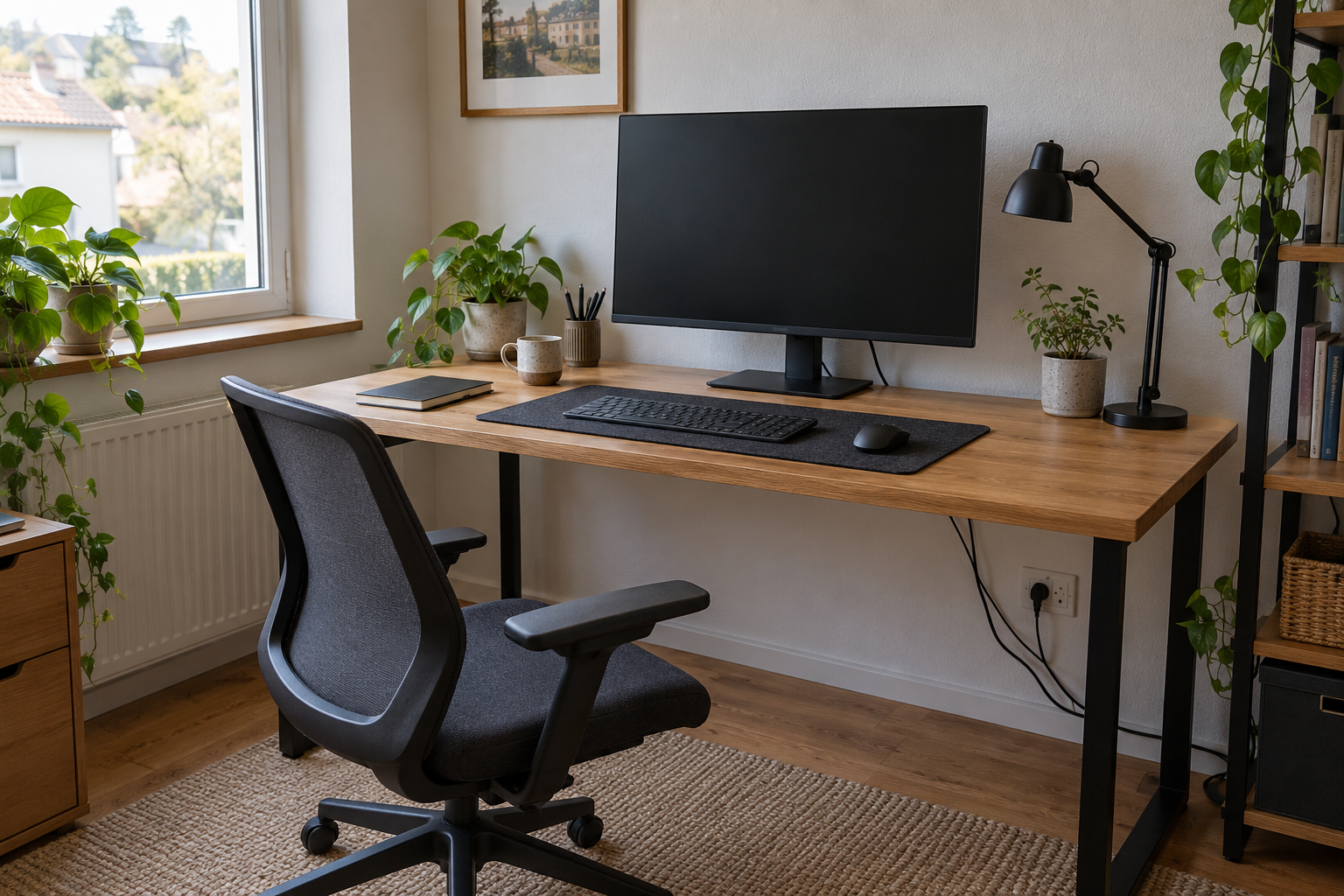
Start a DIY desk-shelf project with a dimensional brief and a supported-use plan. Appearance and board thickness alone do not establish a safe load.
Your decision, at a glance.
| Decision | What to look at | Next check |
|---|---|---|
| Purpose | Accessory storage or display support | Define before designing |
| Geometry | Span, supports and clear opening | Test with a non-load-bearing outline |
| Structure | Material, joints and intended load | Use a supported design, not an assumed rating |
Write the intended use
List the objects for the upper surface and the items to store beneath it. Draw the required clear opening, support locations and the complete footprint on the desktop. Include the monitor stand feet if the shelf is intended to support a display.
If you only need to organize lightweight accessories, keep that purpose separate from a monitor-riser design.
Resolve construction before cutting
A structural design depends on material, span, supports, joints and loading. This article does not provide an engineering calculation or assign a load limit to a generic board. Use a suitably documented design or obtain appropriate expertise for the intended use.
Do not assume a 3D-printed support, adhesive joint or decorative bracket is suitable because it resembles a commercial product.
Mock up the footprint first
Use a non-load-bearing paper or cardboard outline to test whether the proposed size leaves room for inputs, cables and controls. Do not place equipment on an unsupported mockup.
Check whether the project actually improves the work area. If the supports block the keyboard or the new screen position is unsuitable, adjust the dimensions before committing to materials and construction.
Sources & scope
Product catalog snapshot: October 19, 2026. Selected primary references checked October 20, 2026. References are not current Amazon offer, price or availability verification.
This planning brief does not contain a verified exact-model specification or product ranking. Its checks define the information needed for a documented comparison; missing values are intentionally not supplied.
This is a research draft, not a hands-on review. How the research is used